

Choosing the right Positional Alternatives for Agencies starts with understanding what your team needs to replace. Some agencies want better content optimization. Others need multi-client reporting, deeper competitor research, or a clearer picture of how clients appear in AI-generated answers.
Positional combines keyword research, content optimization, internal linking, and performance analytics. An alternative may replace much of that workflow or address one specific need. An AI-search tracking platform, for example, should not automatically be treated as a complete SEO suite.
This guide compares nine tools across features, pricing, pros, and cons. RadarKit is our top pick for agencies building AI-search services, while broader SEO platforms remain useful for teams focused on keyword research, backlink analysis, and technical audits.
Pricing was checked on September 30, 2026. Annual-billing rates are labeled where applicable.
Positional alternatives at a glance
The most useful Positional Alternatives for Agencies fall into three groups: broad SEO platforms, content-focused tools, and AI-search platforms.
| Tool | Best for | Starting price | Main distinction |
| RadarKit | Agency AI-search tracking and delivery | $29/month | AI monitoring, client portal, branded reports, and agents |
| Semrush | Broad SEO and AI-search services | $139/month | Keyword research, audits, competitive insights, and AI tracking |
| Ahrefs | SEO research and competitor analysis | $29/month for Starter; $129/month for Lite | Website, keyword, and backlink research |
| SE Ranking | Multi-client SEO management | $129/month | SEO and GEO tracking with optional agency features |
| Surfer SEO | Content optimization | $49/month, billed annually | Content editing, optimization, and AI tracking |
| Nightwatch | Rankings and client reporting | €79/month, billed annually | Daily rankings, local tracking, and AI visibility |
| Profound | Advanced AI-search analysis | Custom paid pricing | AI-answer analysis, prompt research, and agents |
| Peec AI | AI brand-visibility monitoring | $95/month | Daily tracking, source analysis, and agency credit allocation |
| OtterlyAI | Straightforward AI-search monitoring | $29/month | Prompt monitoring, citation tracking, and GEO audits |
Starting prices only tell part of the story. Before choosing a plan, compare how many client projects, tracked prompts, team members, and reports it includes.
Why Agencies Look for Positional Alternatives
Agencies rarely need identical software setups. A content production agency may prioritize writing guidance, while a technical SEO team may need larger crawl limits and detailed competitor data.
Positional Alternatives for Agencies are worth considering when your service mix calls for different capabilities. These might include branded client reports, location-specific tracking, larger keyword allowances, or daily monitoring of AI answers.
It also helps to distinguish between replacing and extending your current setup. Surfer SEO is a natural candidate for content optimization. RadarKit makes more sense when an agency wants to track AI mentions and turn those findings into client work.
For example, an agency that already has a keyword research platform could add RadarKit for AI-search monitoring and client reporting. An agency rebuilding its entire SEO stack might start with Semrush or SE Ranking instead.
The 9 best Positional alternatives for agencies
These Positional Alternatives for Agencies are organized by their strongest practical use case. Each review explains what the tool does well, what its plans include, and where agencies may need something else.
1. RadarKit: Best for agency AI-search tracking
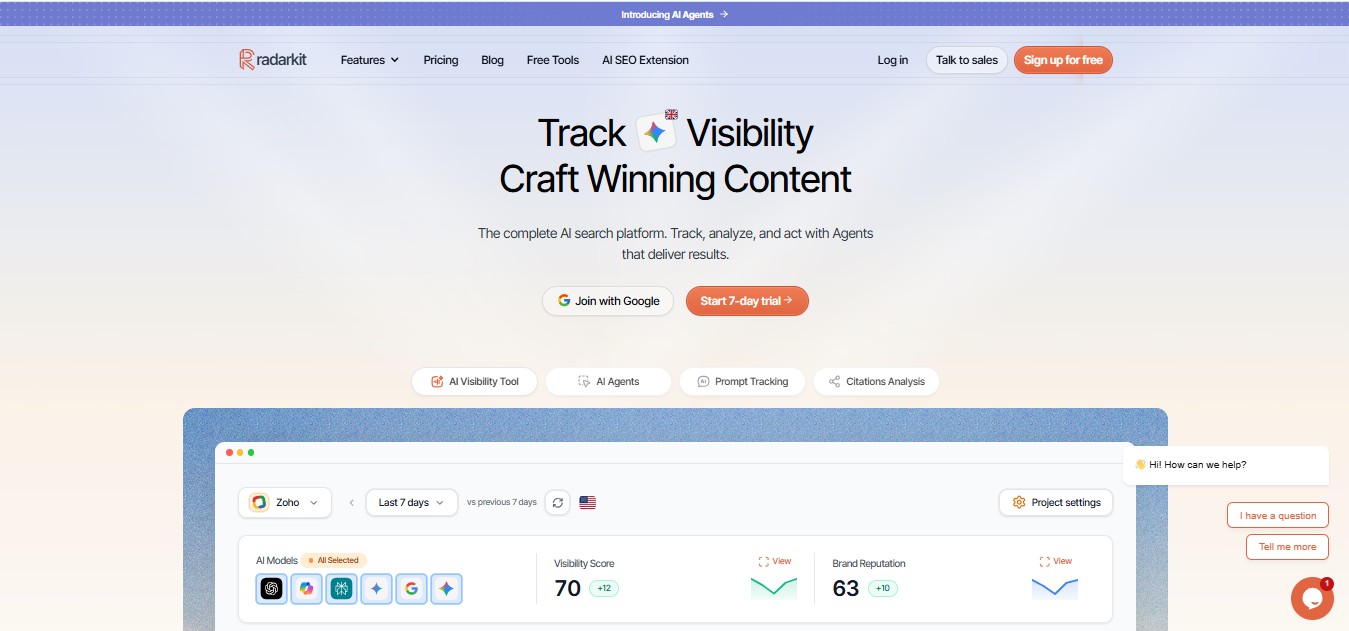
RadarKit suits agencies that want to make AI visibility a repeatable client service. It does more than show whether a brand appears in an AI answer. It connects monitoring with content, outreach, reporting, and client access.
Key features
- AI visibility tracking: Track your brand’s presence in AI-generated responses across ChatGPT, Perplexity, Gemini, Copilot, Google AI Mode, and Google AI Overviews.
- Prompt tracking: Monitor important commercial, informational, comparison, local, product, and category-based prompts relevant to your business.
- Competitor share of voice: Compare your brand’s visibility with competitors and see how frequently each brand appears across your tracked prompts.
- Citation analysis: Discover the domains and specific URLs that AI platforms cite, allowing you to examine which pages are earning those mentions.
- Citation-type analysis: Analyze the types of content AI platforms reference, including listicles, reviews, guides, forums, product pages, communities, and other sources.
- Query fan-out data: Explore related searches and follow-up queries generated around your main AI prompts to uncover additional content opportunities.
- Local and country tracking: Track AI visibility across 50+ locations on standard plans, with expanded city and state-level tracking available for enterprise users.
- AI traffic analytics: Connect AI visibility insights with website traffic data to understand how AI search exposure relates to performance.
- Content Agent: Turn visibility insights into article ideas, content briefs, optimization recommendations, and improvements based on the data collected.
- Outreach Agent: Discover potential citation, backlink, and publisher opportunities using competitor research and source analysis.
- Reddit Agent: Find relevant Reddit conversations and support workflows focused on communities that can influence AI visibility.
- Chat Agent: Interact with your tracked data through quick questions and discover opportunities without manually reviewing multiple reports.
- Google Search Console integration: Combine Google Search Console performance data with your AI visibility research for a broader view of search performance.
- Google Analytics integration: Analyze website traffic alongside AI search visibility to better understand the impact of AI-driven discovery.
- WordPress integration: Connect your content workflow with WordPress to make publishing and content management easier.
- Client Portal: Provide clients with access to selected reports and insights while keeping your internal workspace private.
- Branded PDF reporting: Generate professional, agency-ready PDF reports using the reporting allowances available with your plan.
- MCP and API access: Connect Radarkit data with custom workflows, dashboards, reports, and compatible AI-powered tools.
For an agency, the client-facing tools are a practical advantage. Your team can identify a visibility gap, prepare related content, and share the results without moving everything into a separate reporting platform.
Pricing
| Plan | Monthly price | Projects | Tracked prompts | Refresh frequency |
| Lite | $29 | 2 | 15 | Every 72 hours |
| Growth | $79 | 5 | 50 | Daily |
| Pro | $139 | 10 | 100 | Daily |
| Enterprise | Custom | Unlimited | Custom | Daily or weekly |
Growth includes 10 branded PDF reports, two extra seats, and 19 Content Agent articles or optimizations per month. Pro raises those allowances to 20 reports, five extra seats, and 32 content actions.
Pros
- Client portal and branded reporting are available from Lite.
- All six listed AI-search experiences are included across standard plans.
- Content and outreach tools help teams act on monitoring results.
- Growth and Pro offer clear multi-project allowances.
Cons
- Lite refreshes every 72 hours rather than daily.
- Prompts, content actions, reports, and seats have plan limits.
- State- and city-level tracking require Enterprise.
- Agencies doing extensive backlink research may still need a broader SEO platform.
Among Positional Alternatives for Agencies, RadarKit stands out when client-facing AI-search work is the priority.
2. Semrush: Best for an all-in-one SEO toolkit
Semrush is a broad option for agencies handling keyword research, technical SEO, competitor analysis, and AI visibility. Its SEO + AI Search plans bring several services together, although extra users and reporting options can add to the monthly cost.
Key features
- Keyword research and competitor insights.
- Daily keyword position tracking and website audits.
- AI prompt monitoring and domain-level visibility reports.
- AI-ready site auditing on SEO + AI Search plans.
- Historical data, content optimization, and cannibalization analysis on Pro+.
- API data integration on Advanced.
Pro+ is especially relevant to growing agencies because it supports 15 monitored websites, 1,500 tracked keywords, and 100 daily AI prompts.
Pricing
| Plan | Monthly billing | Monthly equivalent, billed annually |
| SEO | $139 | $117.33 |
| SEO + AI Search Starter | $199 | $165.17 |
| Pro+ | $299 | $248.17 |
| Advanced | $549 | $455.67 |
Additional users start at $45/month. Reporting options also cost extra, including a plan with branding and white-label features.
Pros
- Covers a wide range of traditional SEO tasks.
- Combines keyword and AI-search tracking.
- Higher plans support larger website portfolios.
- Reporting options support regular client updates.
Cons
- Additional users increase the total cost.
- Branded reporting has a separate charge.
- Website and AI-tracking allowances need checking by plan.
- Some advanced content features require Pro+ or higher.
Semrush is one of the Positional Alternatives for Agencies worth considering when replacing a broad SEO workflow matters more than buying a focused AI-search tool.
3. Ahrefs: Best for SEO research and competitor analysis
Ahrefs fits agencies that spend significant time studying competing websites, keywords, links, and content opportunities. Its main plans include limited AI prompt tracking, while larger AI research needs involve separate options.
Key features
- Site Explorer for competitor website research.
- Keywords Explorer for keyword discovery and analysis.
- Site Audit for technical checks.
- Rank Tracker for keyword monitoring.
- Content Explorer and Portfolios on Standard and higher plans.
- Brand Radar for AI visibility research.
- API and MCP access with plan-specific limits.
Brand Radar can help agencies study AI visibility across a wider set of prompts or monitor selected questions. Those are different use cases, so check what a plan includes before budgeting for it.
Pricing
Lite costs $129/month, Standard costs $249/month, and Advanced costs $449/month. Enterprise starts at $1,499/month with an annual commitment. A smaller Starter subscription is listed at $29/month.
Brand Radar AI starts at $199/month. Custom-prompt packages and Content Kit have separate prices.
Pros
- Strong fit for competitor and content research.
- Standard includes Content Explorer and broader research tools.
- Main plans include audits and keyword tracking.
- Dedicated AI options let teams expand into brand monitoring.
Cons
- Lite, Standard, and Advanced each include one user.
- Additional seats cost extra.
- Included AI prompt allowances are limited.
- Content Kit and expanded AI research increase the total cost.
For research-led teams evaluating Positional Alternatives for Agencies, Ahrefs puts more emphasis on traditional SEO investigation than client-facing AI-search delivery.
4. SE Ranking: Best for multi-client SEO management
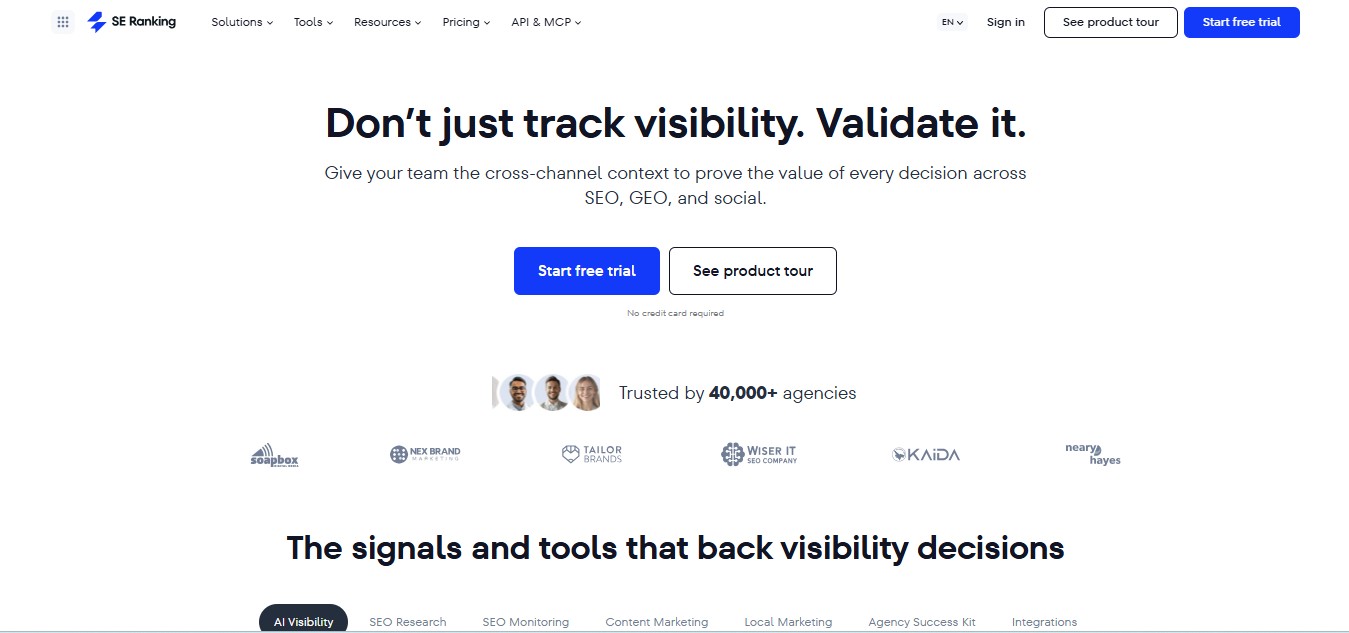
SE Ranking combines SEO and GEO tools with project allowances designed for recurring client work. Its Agency Pack adds client-facing features, so assess the combined price if white-label delivery is essential to your workflow.
Key features
- Daily keyword and AI-prompt tracking.
- Keyword, competitor, and backlink research.
- Website and on-page audits.
- GEO research across multiple domains.
- Google Analytics, Search Console, Matomo, and Data Studio integrations.
- API credits and MCP access.
- White-label access and scheduled reporting through Agency Pack.
Core includes 10 projects, one manager seat, 2,000 daily tracked keywords, and 100 daily AI prompts. Growth increases those allowances to 30 projects, three manager seats, 5,000 keywords, and 250 prompts.
Pricing
Core costs $129/month or $103.20/month billed annually. Growth costs $279/month or $223.20/month billed annually. Enterprise uses custom pricing.
Agency Pack starts at $69/month with annual billing. It adds white-labeling, client seats, lead generation features, and scheduled reports.
Pros
- Clear project and manager-seat allowances.
- Combines traditional SEO and GEO monitoring.
- Growth supports a larger client portfolio.
- Agency Pack adds client-facing access and reporting.
Cons
- Agency Pack is an extra expense.
- Core includes only one manager seat.
- Client seats and manager seats serve different purposes.
- Agencies should budget around their actual tracking volume.
SE Ranking is a practical option among Positional Alternatives for Agencies that want several recurring SEO services in one platform.
5. Surfer SEO: Best for content optimization
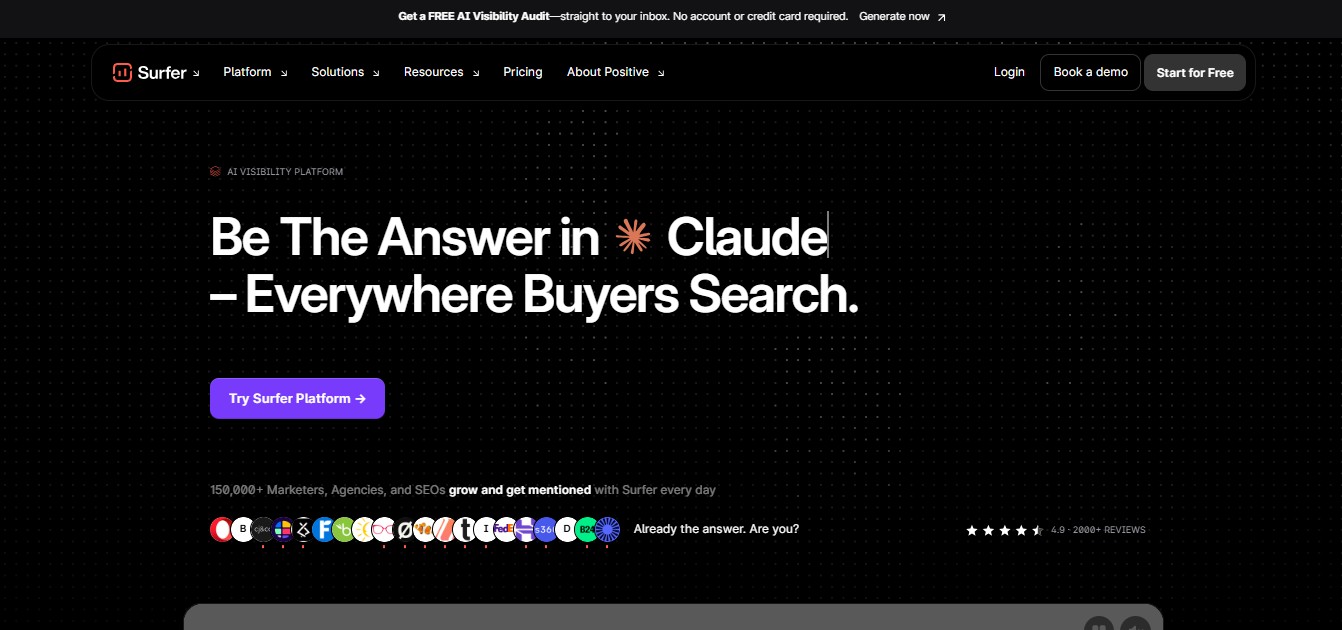
Surfer SEO is a strong candidate for agencies whose main deliverable is written content. Its Content Editor supports writing and editing, while current plans also include AI visibility features.
Key features
- Content Editor with live optimization guidance.
- One-click optimization for existing pages.
- Brand Knowledge and team collaboration.
- AI Tracker for brand mentions, competitor citations, and prompt performance.
- Internal linking and coverage-gap tools on Pro.
- Brand Spaces for working across multiple brands.
Pricing
The pricing page displays these monthly equivalents with annual billing:
- Discovery: $49.
- Standard: $99.
- Pro: $182.
- Peace of Mind: $299.
- AI Search Analytics: $82.
- Enterprise: custom.
Standard includes 25 AI prompts refreshed weekly. Pro includes 50 prompts refreshed daily and five Brand Spaces.
Pros
- Content guidance fits naturally into writing and editing.
- Standard combines content work with AI monitoring.
- Pro adds internal linking and multi-brand features.
- AI Search Analytics provides a monitoring-focused option.
Cons
- The listed headline rates require annual billing.
- Standard’s AI data refreshes weekly.
- Internal linking and Brand Spaces require Pro or higher.
- Rank Tracker is a separate add-on.
Surfer SEO earns its place among Positional Alternatives for Agencies when the main goal is to improve the content production process.
6. Nightwatch: Best for rank tracking and client reports
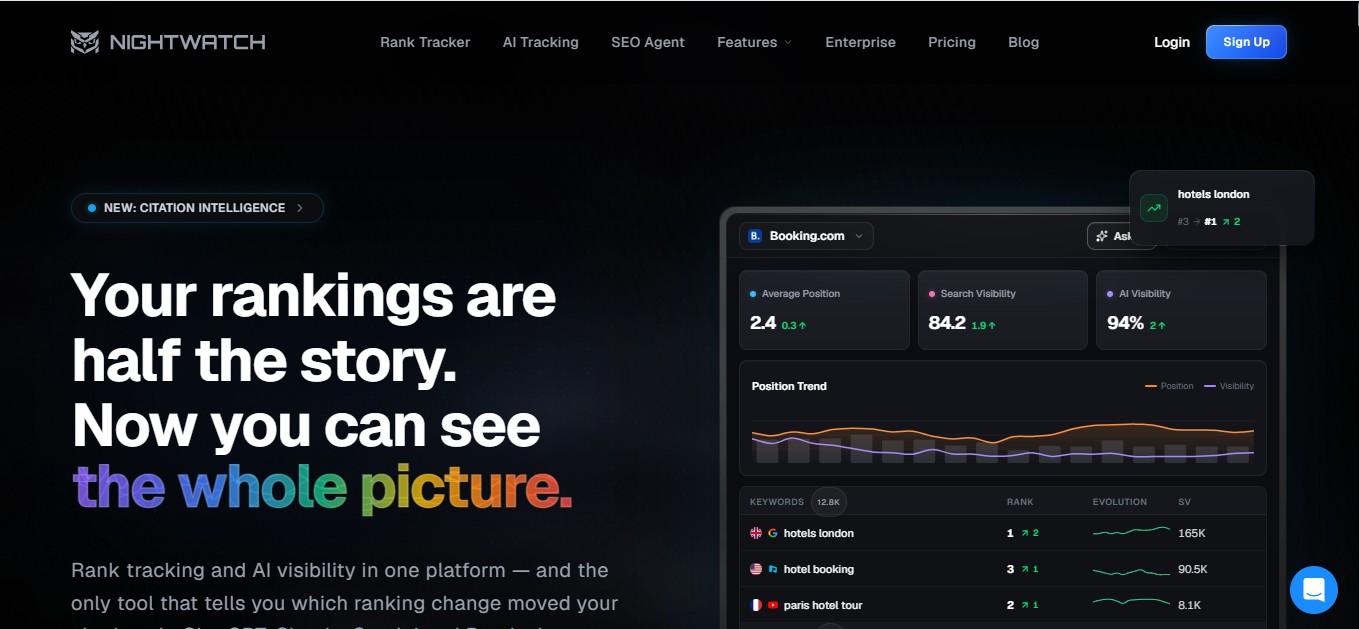
Nightwatch brings daily keyword rankings and AI visibility into one platform. It is relevant to agencies that report results across locations and want to show both traditional rankings and AI mentions.
Key features
- Daily tracking across Google, Bing, YouTube, Google Maps, and other engines.
- Location-based tracking across more than 107,000 locations.
- AI monitoring across ChatGPT, Claude, Gemini, Perplexity, AI Mode, and AI Overviews.
- Citation Intelligence connecting ranking data with AI-visibility analysis.
- Content Studio, keyword research, site audits, and an SEO MCP server.
- White-label reports, Looker Studio, and API access on Professional and higher plans.
Pricing
| Plan | Monthly billing | Monthly equivalent, billed annually |
| Starter | €99 | €79 |
| Professional | €199 | €159 |
| Agency | €499 | €399 |
Professional includes 25 websites, 2,500 keywords, and 150 AI prompts. Agency includes 100 websites, 7,500 keywords, and 500 AI prompts.
Pros
- Daily rankings and AI visibility sit in one platform.
- Professional includes white-label reports.
- Location-based tracking supports local campaigns.
- Research and audit tools extend beyond rank tracking.
Cons
- White-label reporting requires Professional or higher.
- Website, keyword, and prompt allowances vary by plan.
- Prices are displayed in euros.
- Starter supports five websites, which may not suit a larger client portfolio.
7. Profound: Best for advanced AI-search analysis
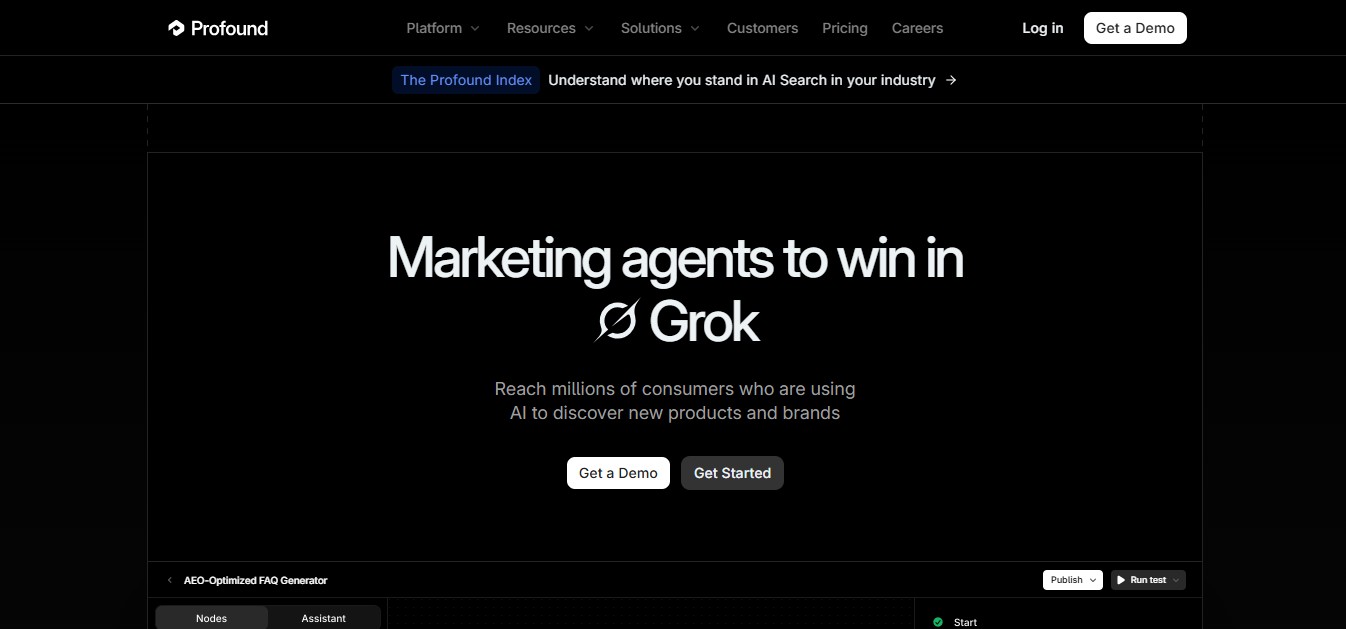
Profound suits agencies running detailed AI-search programs for larger clients. It connects answer analysis, prompt-demand research, AI traffic data, and recurring marketing workflows.
Key features
- Answer Engine Insights for mentions, citations, sentiment, and competitors.
- Prompt Volumes for studying topics and intent in AI conversations.
- Agent Analytics for AI-sourced traffic and attribution.
- Agents and Profound Sheets for repeatable tasks.
- Context Manager for incorporating brand information.
- Enterprise tracking across multiple answer engines.
Pricing
Profound lists a free seven-day trial and custom Enterprise packages. The trial runs 50 prompts daily across ChatGPT, Gemini, and Google AI Overviews.
The current pricing page does not display a public price for its Agency Growth package. Agencies should request a current quote rather than rely on older pricing figures.
Pros
- Detailed analysis of mentions, sentiment, and citations.
- Prompt research helps inform campaign priorities.
- Agents support recurring work.
- Enterprise offers exports, API access, and security controls.
Cons
- Current paid agency pricing requires a quote.
- Trial prompts cannot be customized.
- Trial access excludes historical data and exports.
- Agent usage depends on credits.
8. Peec AI: Best for AI brand-visibility monitoring
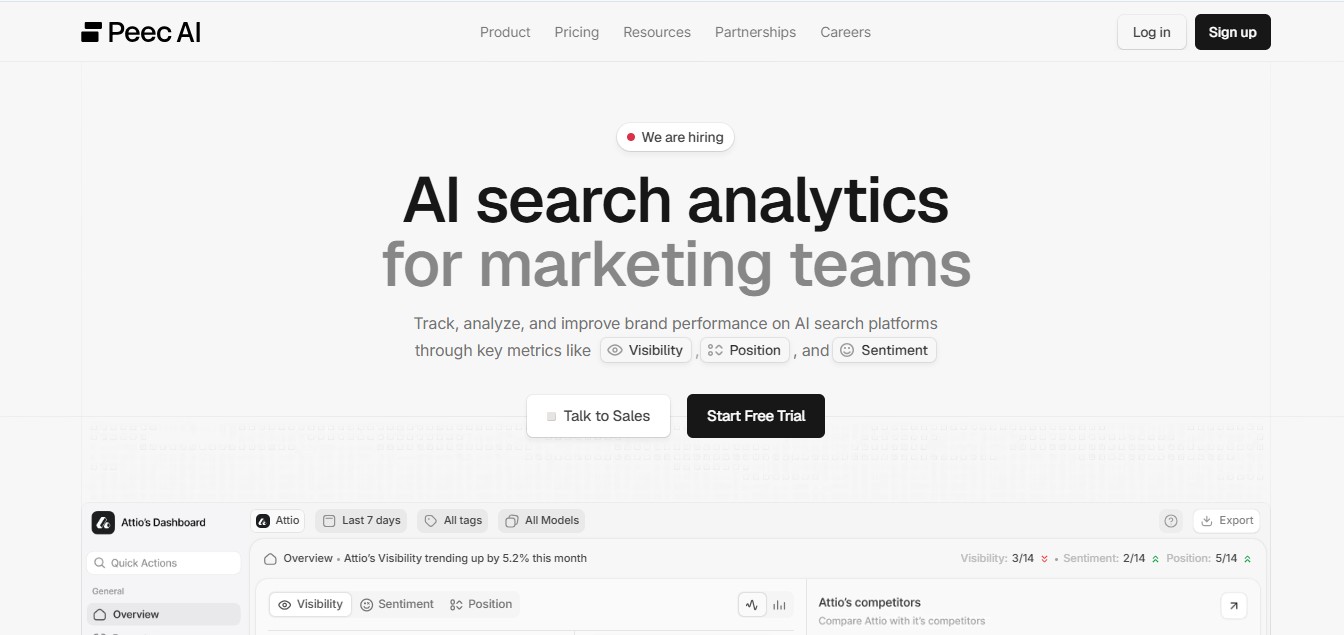
Peec AI focuses on measuring brand performance across AI answers, sources, topics, and competitors. Its feature set also includes agents, crawl insights, and brand-perception analysis.
Key features
- Daily visibility, position, sentiment, and share-of-voice tracking.
- Source analysis at domain and URL level.
- Citation-share and query-fanout analysis.
- Brand-perception tracking and claim checking.
- AI referral and crawler analytics.
- Unlimited users on published brand plans.
- Agency credit bundles for multiple client projects.
Pricing
Starter includes $95/mo for 50 prompts and one project. Pro includes $245/mo for 150 prompts and two projects. Advanced includes $495/mo for 350 prompts and five projects. Enterprise offers custom capacity.
The current numerical subscription prices could not be verified from the retrieved pricing page. Confirm the rate with Peec AI before publishing a price comparison. Its agency plans use credits that can be allocated across clients.
Pros
- Unlimited users support team collaboration.
- Daily tracking is included across brand plans.
- Source analysis can inform citation work.
- Agency bundles allow flexible allocation across clients.
Cons
- Standard brand plans include three active models.
- Additional model coverage may cost extra.
- Brand plans limit project counts.
- A current quote is needed for an accurate price comparison.
9. OtterlyAI: Best for straightforward AI-search monitoring
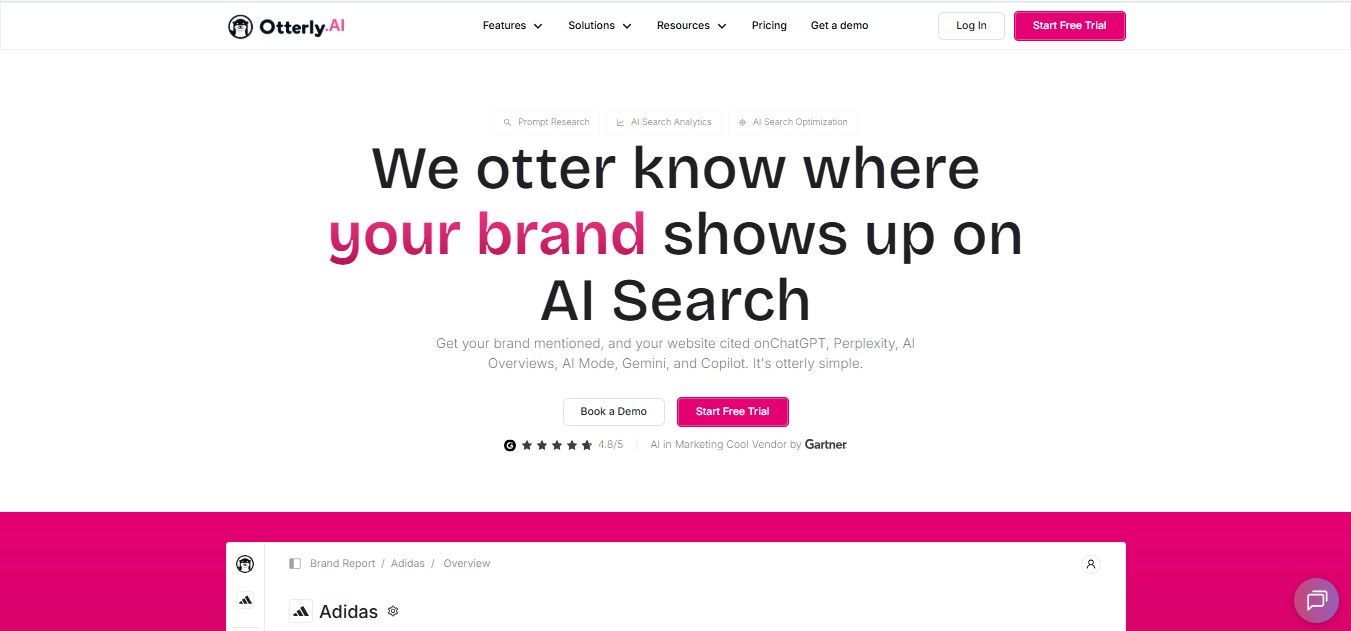
OtterlyAI gives agencies a direct way to track brand mentions and website citations. GEO audits and agency partner options add to its usefulness beyond a basic visibility chart.
Key features
- Prompt-based tracking of brand mentions and citations.
- Monitoring for ChatGPT, Google AI Overviews, Perplexity, and Microsoft Copilot.
- Additional engine options, including Claude, Gemini, and Google AI Mode.
- GEO audits and prompt research.
- Agency Partner allowances and prospect pitch workspaces.
- Crawlability checks for AI crawlers.
Pricing
Lite costs $29/month for 15 prompts. Standard costs $189/month for 100 prompts. Premium costs $489/month for 400 prompts. Enterprise pricing is custom.
Eligible Agency Partners receive 150 prompts on Standard and 500 on Premium. Additional model coverage and prompt capacity should be checked separately.
Pros
- Accessible starting price.
- Clear prompt-based allowances.
- GEO audits add useful website checks.
- Agency Partner options support client work and prospecting.
Cons
- Lite includes only 15 prompts.
- Some AI engines require additional paid coverage.
- Costs rise as tracking needs grow.
- It is a focused AI-search option rather than a complete SEO research suite.
Final Verdict
RadarKit is our top choice among Positional Alternatives for Agencies when the goal is to deliver AI-search tracking, content support, and client reporting from one platform. Its strongest case is the combination of six included AI-search experiences, multi-project access, agents, and client-facing reports.
For a small agency, Growth is a sensible starting point. At $79/month, it covers five projects, 50 daily prompts, 10 branded reports, and two extra seats. Pro expands that capacity to 10 projects and 100 daily prompts for $139/month.
RadarKit is not the best tool for every SEO task. Semrush and SE Ranking are better suited to broader SEO management, Ahrefs fits research-heavy work, and Surfer SEO is a strong content-focused option. Choose RadarKit when its project, prompt, and reporting allowances match the AI-search services you plan to offer.
FAQ
What are the best Positional Alternatives for Agencies?
RadarKit, Semrush, Ahrefs, SE Ranking, Surfer SEO, Nightwatch, Profound, Peec AI, and OtterlyAI are useful options. The best choice depends on whether your priority is broad SEO work, content optimization, rank tracking, or AI-search visibility.
Is RadarKit a complete replacement for Positional?
Not for every workflow. RadarKit focuses on AI-search visibility, content actions, and client reporting. Compare the features your team uses in Positional before replacing it entirely.
Why choose RadarKit for agency AI-search services?
RadarKit combines a client portal, branded reports, agents, and AI-search tracking. Its Growth and Pro plans also include daily monitoring and multiple projects for recurring client work.
Which alternative is best for content optimization?
Surfer SEO is a strong content-focused choice. Its Content Editor provides live guidance, while higher plans add internal linking, coverage-gap tools, and brand-specific workflows.
Which tools combine traditional SEO with AI visibility?
Semrush, SE Ranking, Ahrefs, and Nightwatch offer both traditional SEO functions and AI-visibility options. Their included prompts, research features, and reporting allowances differ by plan.
What should agencies compare beyond starting price?
Check project limits, team seats, refresh frequency, included AI engines, reporting allowances, and extra usage charges. The lowest advertised price may not cover the client workload you need.
